TripAdvisor

Toll Free USA: 1877-209-7243

Discover all about the Galapagos Islands

The Galapagos Islands are a haven of extraordinary species that have shaped the study of natural science while remaining basically untouched by human interference. Here you will find essential information about the Galapagos, including its history, map, visitor points, geography, and climate. Discover a living paradise where nature’s wonders thrive in harmony.

Where are the Galapagos Islands located?

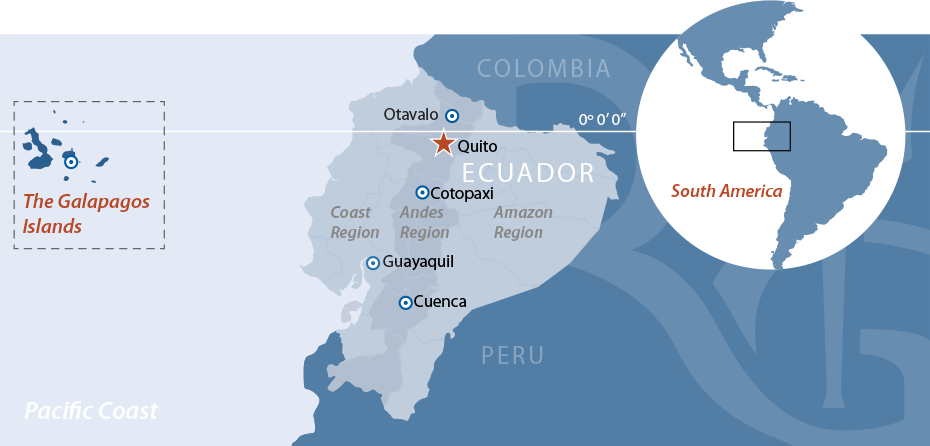
Galapagos is a group of volcanic islands in the Eastern Pacific. The archipelago is a province of the Republic of Ecuador and due to their location the only way to reach the Islands is by air. The distance from Ecuador to Galapagos is approximately 1,000 km (600 miles).

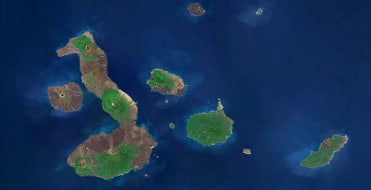
Galapagos consists of 127 islands, islets, and rocks, a number that continuously evolves due to volcanic activity, which creates new lava fields, islets, and even expands existing islands. In this map of Ecuador and Galapagos islands you will be able to see the isolated location of the archipelago.

Ecuador & Galapagos Map
Galapagos Geography

Galapagos Islands Geography

The archipelago covers approximately 7,880km² (3,040mi²) of land and is spread across 45,000km² (17,000mi²) of ocean.

  • The largest island is Isabela, with an area of 4,855km² (1,771mi²).
  • The highest point in the Galapagos is Wolf Volcano, also located on Isabela Island, with an altitude of 1,707m (5,600ft).
  • There are over 15 main islands, of which only 4 are inhabited: Floreana, San Cristóbal, Santa Cruz, and Isabela.

The main islands of Galapagos are: Baltra, North Seymour, Española, Fernandina, Floreana, Genovesa, Isabela, Pinta, Rabida, San Cristobal, Santa Cruz, Marchena, Santa Fe, Bartholomew, Plazas, Santiago, Darwin and Wolf.

Galapagos Exploration Map: Island by Island

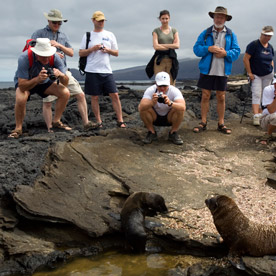
The Galapagos Islands remain largely untouched by human presence. Most islands can only be explored with a certified naturalist guide on tours approved by the Galapagos National Park. Here are just a few of the remarkable attractions that each major island has to offer.

Click on each of the red dots of an island to view and learn about its Visitor Sites. These are all the park approved spots you may visit on land.

San Cristobal

San Cristobal

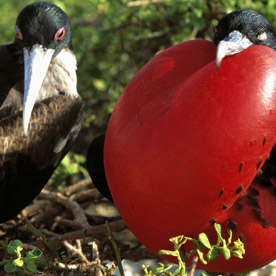
San Cristóbal boasts a blend of history, nature, and breathtaking landscapes. Its key attractions include Junco Lagoon and nesting sites for blue-footed, Nazca, and red-footed boobies, along with great frigatebirds and large sea lion colonies.

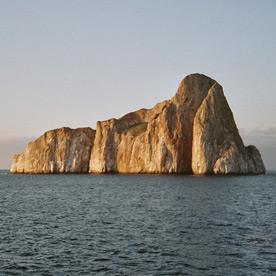
David Rodriguez Breeding Center | El Junco Lagoon | Gianni Arismendy Interpretation Center | Kicker Rock | La Lobería | Lobos Island | Lobos Island – Diving | Pitt Point | Puerto Chino | San Cristobal Airport | Tijeretas Hill | Witch Hill

Santa Cruz

Santa Cruz

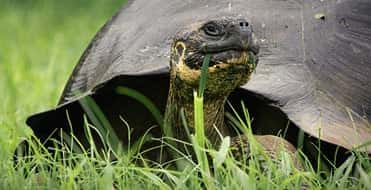
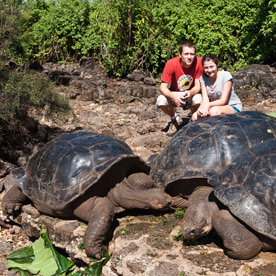
The central hub of the Galapagos, Santa Cruz features Puerto Ayora, the largest town in the archipelago. Visitors can explore diverse vegetation zones and spot giant tortoises, marine and land iguanas, finches, sea lions and frigatebirds.

Bachas Beach | Black Turtle Cove | Borrero Bay | Carrion Point | Carrion Point – Diving | Cerro Mesa | Dragon Hill | Eden Islet | El Chato Tortoise Reserve | Fausto Llerena Breeding Center | Garrapatero Beach | Lava Tunnels | Santa Cruz Highlands | Tortuga Bay | Twin Craters

Genovesa

Genovesa

Known as “Bird Island,” Genovesa offers incredible seabird diversity within the stunning Darwin Bay. Expect to see red-footed boobies, swallow-tailed gulls, Nazca boobies, and red-billed tropicbirds amid tide pools and lush cliffs.

Darwin Bay | El Barranco

Española

Española

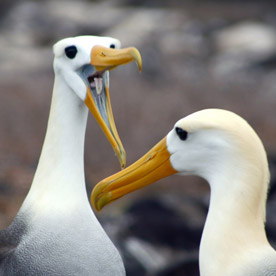
This southeastern gem is home to the iconic waved albatross, marine iguanas, and mockingbirds. Thorny vegetation and dramatic cliffs create a unique environment where wildlife thrives.

Gardner Bay/Islet, Osborn Islet | Suarez Point

Santa Fe Island

Santa Fe Island

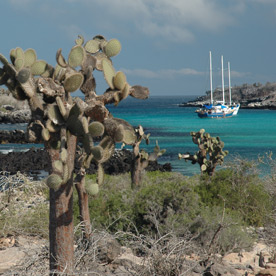
Santa Fe (Barrington) is home to the small picturesque bay and anchorage on the island’s northeast coast. The bay has two visitor trails, one leading to a scenic viewpoint atop a cliff, and the other spanning from a small beach to a tall prickly pear cactus forest.

Santa Fe Island

South Plaza Island

South Plaza Island

The steep cliffs of South Plaza island were formed by rising lava and are now covered by Opuntia cacti. It is also home to one of the largest sea lion colonies as well as colorful yellow and red land iguanas. The most characteristic plant is Sesuvium. During the rainy season its color is a greenish to yellowish […]

South Plaza Island

Baltra

Baltra

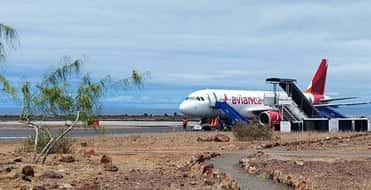
Often the starting point for many Galapagos adventures, Baltra is home to a major airport. Despite its small size, the island shelters land iguanas and Galapagos finches in its arid landscape.

North Seymour Island

North Seymour Island

Galapagos sea lions, blue-footed boobies and magnificent frigatebirds are abundant on North Seymour Island. The island was formed by a series of submarine lava containing layers of sediment that were uplifted by tectonic activity. The island is characterized by its arid vegetation zone.

North Seymour Island

Mosquera Islet

Mosquera Islet

Located between the islands of Baltra and North Seymour, this reef of rocks and coral (the result of an uprising) is only 160 meters across at its narrowest width. This island has one of the largest populations of sea lions and is home to many shorebirds. There have been occasional reports at this site of […]

Mosquera Islet

Floreana

Floreana

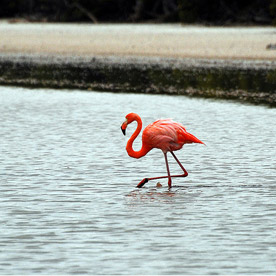
Steeped in mystery and history, Floreana is a must-visit for snorkeling enthusiasts. Visitors can marvel at flamingos in its lagoons and swim alongside sea turtles in pristine waters.

Baroness Viewing Point | Champion Islet | Cormorant Point | Devil’s Crown | Post Office Bay

Santiago

Santiago

Once a pirate haven, Santiago’s rugged landscape boasts lava formations and nesting sites for marine birds. The island’s highlights include fur seals, sea lions, and the occasional sighting of Galapagos hawks.

Buccaneer Cove | Chinese Hat Islet | Cousins Rocks | Egas Port | Espumilla Beach | Sullivan Bay

Rabida Island

Rabida Island

Rabida Island (Jervis) is one of the most colorful and volcanically varied islands in the archipelago and a great snorkeling site. Its famous maroon sandy beach and stunning lookouts provide wonderful landscapes. The island is a birdwatcher’s delight. Some of the rarest species are in abundance, such as nine varieties of finches, large-billed flycatchers, Galapagos […]

Rabida Island

Chinese Hat Islet

Chinese Hat Islet

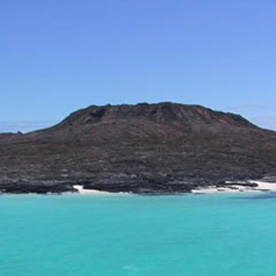
This small islet is located near the southeast coast of Santiago Island. Its name comes from the distinct shape of the islet’s summit. This small islet is a great location to view many geological formations such as lava tubes and lava flows.

Chinese Hat Islet

Bartholomew Island

Bartholomew Island

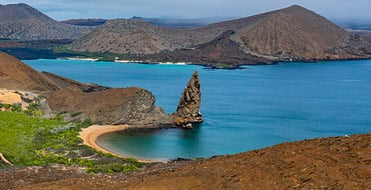
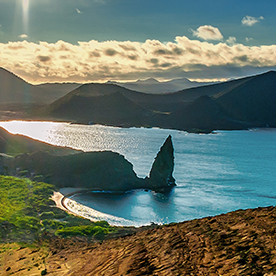
Home of the famous Pinnacle Rock, Bartholomew consists of an extinct volcano with a variety of red, orange, black and even green volcanic formations. A trail of stairs leads to the summit of the volcano, boasting one of the best views of the islands. The beach is perfect for snorkeling and possible sightings of the […]

Bartholomew Island

Fernandina

Fernandina

The youngest and most pristine island in the archipelago, Fernandina features black lava fields and lush mangroves. Visitors can see flightless cormorants, marine iguanas, Galapagos penguins, racer snakes and sea lions.

Cape Douglas (Jun-Dec) | Espinoza Point | Mangle Point

Isabela

Isabela

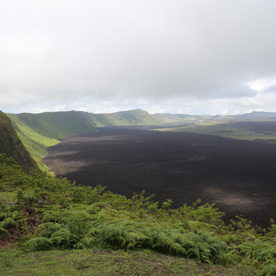
The largest island, formed by five fused volcanoes, Isabela offers diverse landscapes from lava fields to lush highlands. It is home to giant tortoises, flightless cormorants, penguins, and vibrant marine life.

Arnaldo Tupiza Breeding Center | Cape Marshall (Jan-May) | Coka Port (Jan-May) | Concha de Perla | Elizabeth Bay | Moreno Point | Puerto Villamil | Punta Vicente Roca (Jun-Dec) | Sierra Negra Volcano | Tagus Cove | The Wall of Tears | The Wetlands | Tintoreras Islet | Urbina Bay | Vicente Roca Point
Galapagos Islands:
Difference between East & West islands

Shaped by volcanic activity atop the Nazca tectonic plate’s hot spot, the Galapagos Archipelago is a dynamic and ever-changing landscape. Geologically young, the islands are estimated to be no more than 5 million years old, with the westernmost islands still forming—some only a few hundred thousand years old.

The eastern islands are older, having drifted further from the volcanic hot spot, while the younger western islands remain geologically active and continue to grow. This age difference creates contrasting landscapes and habitats, offering unique wildlife and striking scenery in each region.

East Islands

East Islands of Galapagos

The eastern islands are characterized by towering cacti and white sandy beaches. Wildlife highlights include the Waved Albatross, Red-footed Boobies and large land iguana colonies.

East Islands

West Islands of Galapagos

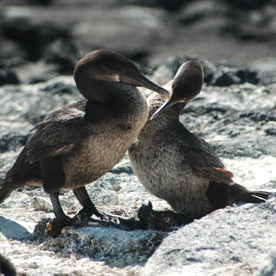
The western islands, particularly Isabela and Fernandina, showcase rugged volcanic terrain with dramatic cliffs, towering volcanoes, and vast lava fields. Unique wildlife includes the Flightless Cormorant and the Galapagos Hawk.
Our carefully curated Galapagos cruise itineraries allow our guests to experience the beauty and diversity of both the eastern and western islands depending on the vessel and length of the program. Let our expert destination specialists guide you in selecting the perfect route tailored to your interests and needs.
Frequent Questions about Galapagos Location & Visitor Points

Galapagos is located approximately 600 miles (1,000 km) off the coast of Ecuador in the Eastern Pacific, the Galapagos Islands have been part of Ecuador’s territory since 1832.

The Galapagos archipelago consists of 127 islands, islets, and rocks, continually evolving due to volcanic activity.

East Islands: Older, with white sandy beaches and unique wildlife like the Waved Albatross and Red-footed Boobies.

West Islands: Geologically active, featuring rugged volcanic landscapes, with species like the Flightless Cormorant and Galapagos Hawk.

The Galapagos Islands are a unique evolutionary paradise, shaped by volcanic activity and the convergence of ocean currents. Their equatorial location fosters an extraordinary ecosystem, home to rare and diverse wildlife.

In 1835, Charles Darwin arrived in the Galápagos Islands aboard the HMS Beagle. His observations of the unique wildlife of the Islands helped inspire his work on evolution by natural selection published in his book On the Origin of Species.

You can explore every official visitor site on our interactive Galápagos map. Click each island to discover landing points, activities, and wildlife highlights.


Plan Your Galapagos Cruise Vacation

Our Galapagos Islands programs let you safely explore one of the most wonderful places in the World.


Contact Us Today!

USA Flag +1-877-209-7243 Ecuador Flag +593-2-6024-568
Greener Future

With each Galapagos cruise booked, you are contributing:

CO2
1.5 TONS
OFFSET
Shark
1 SHARK
PROTECTED
Trash
8 LB OF
TRASH COLLECTED
Social
2 KIDS TRAINED IN
SUSTAINABILITY

TripAdvisor

2025 © Galapagos Islands, Ecuador. Royal Galapagos  •  Privacy Policy  •  [email protected]